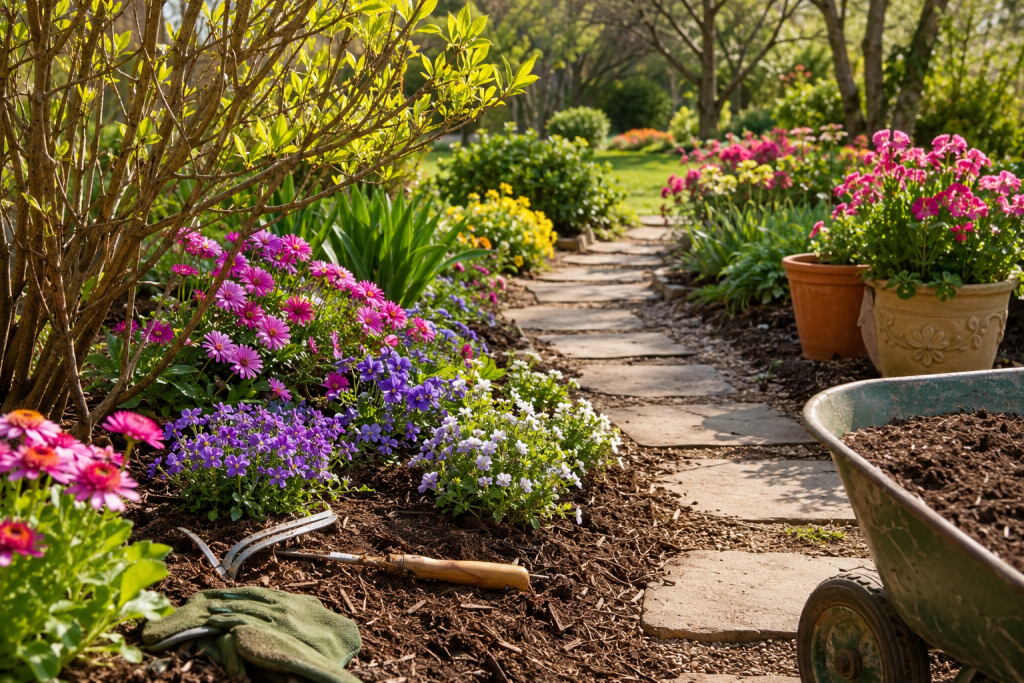
Spring Has Sprung: What to Do in Your Garden After Winter Pruning, Composting and Mulching
Winter pruning is finished. The compost has been worked in. The mulch is down. Your garden has had its winter preparation — and now spring has sprung!
As temperatures rise and plants wake from their winter slowdown, all that preparation starts paying off. Fresh shoots appear, lawns begin actively growing again, flower buds develop and suddenly there is much more happening in the garden.
So, what should you do in your garden after winter pruning, composting and mulching? Now is the time to shift from winter preparation to spring growth and maintenance: check new growth, feed where necessary, adjust watering, plant for warmer months, control weeds and watch for pests.
In This Article
- What to Do at the Beginning of Spring
- Look for Fresh Spring Growth
- Feed Your Garden for the Growing Season
- Adjust Your Watering
- Give Your Irrigation System a Spring Check-Up
- Bring Fresh Spring Colour Into the Garden
- Refresh Pots, Patios and Entertainment Areas
- Wake Up the Lawn
- Get Ahead of Spring Weeds
- Start Your Spring Pest Patrol
- Check Your Mulch
- Vegetable and Herb Garden
- Think About the Garden You Want This Summer
- Spring Gardening FAQs
What Should You Do in the Garden at the Beginning of Spring?
Inspect plants for healthy new growth; feed actively growing plants where needed; gradually increase watering as temperatures rise; check irrigation; add spring and summer colour; give the lawn attention; remove weeds before they seed; monitor pests and diseases; check mulch; and start planning for summer.
The key is not to undo all your winter work. Spring is about building on it.
Look for Fresh Spring Growth
Take a walk through the garden and inspect roses, shrubs, perennials and trees. Look for strong new shoots, developing buds and fresh leaves. Identify branches or stems that have not recovered from winter damage.
In frost-prone gardens, avoid being impatient with frost-damaged plants. Some only reveal the true extent of damage once warmer weather arrives and new growth begins.
Should You Prune Again in Spring?
Not necessarily. If major pruning was completed in winter, most plants do not need another hard prune simply because spring has arrived. Remove clearly dead or damaged material where appropriate, lightly shape plants when needed, and remember that pruning requirements vary by species.
Feed Your Garden for the Growing Season
Compost and fertiliser do different jobs. Compost primarily improves soil structure, organic matter and overall soil health, while an appropriate fertiliser can provide nutrients required for active growth. Spring is when many plants begin growing vigorously, so nutritional demand can increase.
What Plants May Benefit From Spring Feeding?
Depending on the plant and soil, spring feeding may benefit roses, flowering shrubs, established trees, fruit trees, perennials, annuals and seedlings, lawns, vegetables, herbs and container plants.
Choose a fertiliser suited to what you are growing and follow the recommended application rate. More fertiliser does not automatically mean more flowers.
Adjust Your Watering as the Weather Warms
Warmer days, longer daylight hours and faster growth can increase water demand, but there is no single watering schedule for every South African garden. Soil, rainfall, temperature, sun, wind, mulch and plant maturity all matter.
How Often Should You Water in Spring?
Check the soil rather than relying only on a calendar. The surface can look dry while the root zone remains moist beneath mulch. Where appropriate, deeper, less frequent watering can encourage stronger roots compared with constant shallow watering.
What Is the Best Time to Water?
Morning is generally an excellent time. Plants have access to moisture as the day warms, while unnecessary overnight leaf wetness can be reduced.
Give Your Irrigation System a Spring Check-Up
Run every irrigation zone and watch it operate. Check blocked emitters, broken sprinkler heads, leaking fittings, dry patches, overwatered areas, incorrect timer settings and plants that now block sprinkler coverage.
Efficient irrigation is about getting the right amount of water to the right place at the right time.
Bring Fresh Spring Colour Into the Garden
Spring is the perfect opportunity to fill bare spaces, refresh beds and pots, introduce new combinations and start building the colourful garden you want to enjoy through the warmer months.
What Can You Plant in Spring in South Africa?
Depending on local conditions and late-cold risk, possibilities include petunias, salvias, gazanias, marigolds, begonias, dianthus, zinnias, sunflowers, pelargoniums, clivias for suitable shade, summer-flowering bulbs, herbs and seasonal vegetables.
Before buying, ask four questions: How much sun does it need? How much water? How large will it become? Will it thrive in my garden’s conditions?
Refresh Pots, Patios and Entertainment Areas
Remove tired plants, inspect drainage holes and repot severely root-bound plants. Where appropriate, replace depleted potting medium and choose plants according to the light the area receives. A few well-positioned containers can transform an entrance, patio or braai area.
Wake Up the Lawn
As active growth resumes, assess thin areas, bare patches, thatch and weeds. Spring lawn care may involve mowing, feeding, repairing bare areas and weed management depending on lawn type and condition. Avoid removing too much leaf material in one mow, and do not assume aggressive renovation suits every grass type.
Get Ahead of Spring Weeds
Warmer soil and more frequent watering can trigger rapid weed growth. Deal with weeds while they are young and, where practical, remove them before they flower and set seed. A little work now can prevent considerably more work later.
Start Your Spring Pest Patrol
Tender new shoots can attract aphids, thrips, snails, slugs and other garden pests. Inspect affected leaves, stems and flowers closely and identify the problem before choosing a treatment.
Don’t Forget the Good Guys
Not every insect is a pest. Gardens also support beneficial insects and pollinators, so avoid indiscriminate treatment.
Early identification helps target the actual problem.
Check Your Mulch — Don’t Automatically Remove It
Mulch remains useful as temperatures rise because it can help conserve moisture, suppress weeds and protect the soil surface. Check whether it has washed away, become too thin or piled against stems and trunks. Redistribute or top it up where necessary.
Don’t Forget the Vegetable and Herb Garden
As conditions warm, gardeners can transition toward warm-season crops while taking local temperatures and late-frost risk into account. Depending on conditions, options can include tomatoes, peppers, chillies, beans, cucumbers, beetroot, spinach and herbs such as basil, parsley, rosemary, thyme and oregano.
Pay close attention to young seedlings: their smaller root systems can dry out faster than those of established plants.
Think About the Garden You Want This Summer
Stand back and look at the whole garden. Do you need more privacy, shade, colour or cohesion? Is irrigation reaching new beds? Does the planting feel intentional? Spring is a useful time to plan broader improvements before the hottest part of summer.
Sometimes You Need More Than Another Plant
A new plant can fill a gap, but thoughtful planning can transform an outdoor space. Consider how trees, shrubs, groundcovers, paths, lawn, containers, entertainment spaces, irrigation and focal points work together.
Visit Plant Paradise for plants, garden inspiration and advice.
Make This the Spring Your Garden Comes Alive
Winter gardening is about preparation. Spring gardening is about momentum. The pruning helps direct new growth, compost supports healthier soil, and mulch helps protect that soil and retain moisture.
Feed where necessary. Water wisely. Watch for pests. Control weeds early. Refresh tired spaces. Plant for colour, texture and interest — and start creating the garden you want to enjoy throughout summer.
Spring has sprung. Now it’s time to grow.
Spring Gardening FAQs
What should I do in my garden at the beginning of spring?
Check plants for new growth and winter damage, feed where appropriate, adjust watering as temperatures rise, inspect irrigation, control weeds, monitor pests and start planting suitable spring and summer plants.
When should I start fertilising my garden in spring?
Many actively growing plants benefit from feeding as spring growth begins. Timing and product choice depend on the plant, soil and fertiliser, so follow product instructions.
Should I remove mulch after winter?
Generally, useful organic mulch can remain. Check its depth, redistribute it if necessary and keep excessive mulch away from stems and tree trunks.
How often should I water my garden in spring?
There is no universal schedule. Weather, rainfall, soil, sun, plant type and establishment all matter. Check the soil rather than relying only on a fixed timetable. Deeper, less frequently.
What can I plant in spring in South Africa?
Spring opens the door to seasonal colour, perennials, shrubs, herbs, vegetables and summer-flowering bulbs. Choose according to region, frost risk, sun, soil and water conditions.
Should I prune my plants again in spring?
Not every plant needs spring pruning. After major winter pruning, focus on appropriate dead or damaged material, light shaping and plant-specific maintenance.
How can I prepare my lawn for summer?
As active growth resumes, mow appropriately, assess bare or thin patches, control weeds, feed according to lawn type and check irrigation coverage.
How do I prepare my garden for summer?
Use spring to establish suitable plants, improve irrigation efficiency, address lawn and weed issues, maintain mulch and identify areas needing shade, screening or landscaping.